Mastering the Business Model Canvas: A Comprehensive Guide
Learn how to leverage the Business Model Canvas framework to design, analyze, and improve your business model with practical examples and expert insights.
Mastering the Business Model Canvas: A Comprehensive Guide
The Business Model Canvas is one of the most powerful strategic management tools available to entrepreneurs and business leaders today. Developed by Alexander Osterwalder, this visual framework allows you to describe, design, challenge, and pivot your business model with clarity and precision.
What is the Business Model Canvas?
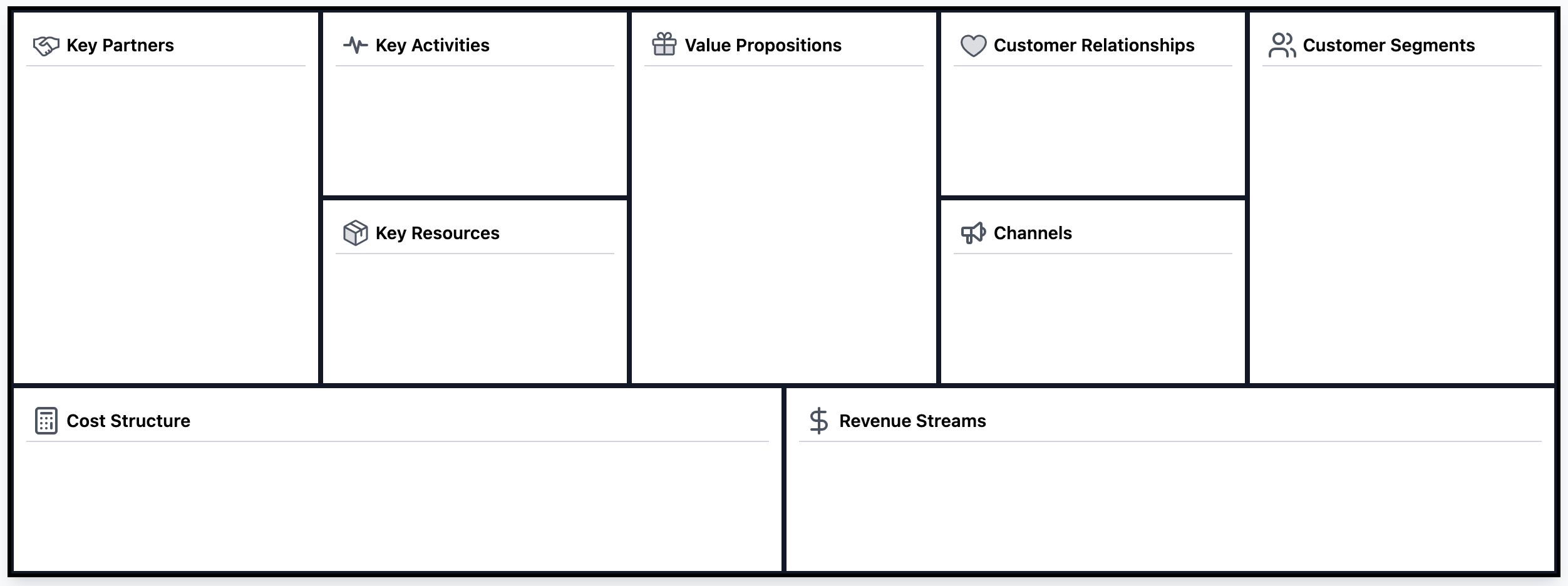
The Business Model Canvas is a strategic management template that visualizes the key elements of a business on a single page. It consists of nine interconnected building blocks that represent the fundamental aspects of how a company creates, delivers, and captures value.
The Nine Building Blocks
1. Customer Segments
Your customer segments define the different groups of people or organizations your business aims to reach and serve. Understanding your customers is the foundation of any successful business model.
Key Questions to Ask:
- Who are your most important customers?
- What are their needs, behaviors, and preferences?
- Are you serving a mass market, niche market, or segmented market?
Example: Netflix serves multiple customer segments including families seeking entertainment, young professionals looking for on-demand content, and international audiences with localized content preferences.
2. Value Propositions
Your value proposition describes the bundle of products and services that create value for a specific customer segment. It's the reason why customers choose your company over competitors.
Key Components:
- Newness: Offering something completely new
- Performance: Improving product/service performance
- Customization: Tailoring to specific customer needs
- Design: Superior aesthetic or functional design
- Brand/Status: Association with a prestigious brand
- Price: Offering similar value at a lower cost
- Cost Reduction: Helping customers reduce costs
- Risk Reduction: Minimizing risks for customers
- Accessibility: Making products/services more accessible
- Convenience/Usability: Making things easier to use
Example: Uber's value proposition combines convenience (on-demand rides), price transparency, cashless payments, and accessibility through a mobile app.
3. Channels
Channels describe how your company communicates with and reaches its customer segments to deliver your value proposition. This includes both communication and distribution channels.
Channel Phases:
- Awareness: How do you raise awareness about your products/services?
- Evaluation: How do you help customers evaluate your value proposition?
- Purchase: How do you allow customers to purchase?
- Delivery: How do you deliver your value proposition?
- After-sales: How do you provide post-purchase support?
Example: Apple uses a multi-channel approach including retail stores, online store, third-party retailers, and its App Store ecosystem.
4. Customer Relationships
This building block describes the types of relationships you establish with specific customer segments. Relationships can range from personal to automated.
Types of Relationships:
- Personal assistance
- Dedicated personal assistance
- Self-service
- Automated services
- Communities
- Co-creation
Example: Amazon combines self-service (easy-to-use website), automated recommendations (personalized suggestions), and customer support (24/7 assistance).
5. Revenue Streams
Revenue streams represent the cash a company generates from each customer segment. Each stream may have different pricing mechanisms.
Types of Revenue Streams:
- Asset sale
- Usage fee
- Subscription fees
- Lending/Renting/Leasing
- Licensing
- Brokerage fees
- Advertising
Pricing Mechanisms:
- Fixed pricing (list price, product feature dependent, customer segment dependent)
- Dynamic pricing (negotiation, yield management, real-time market)
Example: Spotify generates revenue through both subscription fees (Premium) and advertising (Free tier), creating two distinct revenue streams.
6. Key Resources
Key resources are the most important assets required to make your business model work. These can be physical, intellectual, human, or financial.
Types of Resources:
- Physical: Manufacturing facilities, buildings, vehicles, systems
- Intellectual: Brands, proprietary knowledge, patents, copyrights, data
- Human: Specialized talent, expertise, knowledge workers
- Financial: Cash, lines of credit, stock options
Example: Google's key resources include its search algorithm (intellectual), massive data centers (physical), talented engineers (human), and strong cash position (financial).
7. Key Activities
Key activities are the most important things a company must do to make its business model work. These are the strategic actions required to create and offer value propositions.
Categories of Activities:
- Production: Designing, making, and delivering products
- Problem-solving: Consulting, training, and finding solutions
- Platform/Network: Platform management, service provision, platform promotion
Example: For Facebook, key activities include platform development, maintaining infrastructure, user acquisition, and content moderation.
8. Key Partnerships
The network of suppliers and partners that make the business model work. Companies create partnerships to optimize their business models, reduce risk, or acquire resources.
Types of Partnerships:
- Strategic alliances between non-competitors
- Coopetition: Strategic partnerships between competitors
- Joint ventures
- Buyer-supplier relationships
Motivations for Partnerships:
- Optimization and economy of scale
- Reduction of risk and uncertainty
- Acquisition of particular resources and activities
Example: Tesla partners with battery manufacturers (Panasonic), technology companies (NVIDIA for AI), and charging infrastructure providers to build its electric vehicle ecosystem.
9. Cost Structure
This describes all costs incurred to operate your business model. It's about understanding which key resources and activities are most expensive.
Types of Cost Structures:
- Cost-driven: Focus on minimizing costs (low-cost airlines, budget retailers)
- Value-driven: Focus on value creation (luxury brands, premium services)
Cost Characteristics:
- Fixed costs: Salaries, rent, utilities
- Variable costs: Raw materials, production costs
- Economies of scale
- Economies of scope
Example: Amazon invests heavily in infrastructure (warehouses, technology) as fixed costs but benefits from massive economies of scale as volume increases.
How to Use the Business Model Canvas
Step 1: Define Your Customer Segments
Start with your customers. Who are you creating value for? Be specific about demographics, behaviors, needs, and pain points.
Step 2: Craft Your Value Proposition
What problems are you solving? What needs are you satisfying? Your value proposition must clearly articulate why customers should choose you.
Step 3: Map Out Your Channels
How will you reach your customers? Consider both digital and physical channels, and how they work together in the customer journey.
Step 4: Design Customer Relationships
What type of relationship does each customer segment expect? How will you acquire, retain, and grow your customer base?
Step 5: Identify Revenue Streams
How will you generate income? What are customers willing to pay for? Consider multiple revenue streams and pricing strategies.
Step 6: Determine Key Resources
What resources do you absolutely need? Focus on the critical few rather than listing everything.
Step 7: Outline Key Activities
What are the critical activities required to deliver your value proposition? Focus on strategic activities that differentiate you.
Step 8: Establish Key Partnerships
Who are your key partners and suppliers? What resources or activities do they provide?
Step 9: Calculate Your Cost Structure
What are your most important costs? How do they relate to your revenue streams?
Best Practices for Business Model Canvas
1. Start with Customers
Always begin with customer segments and value propositions. Without customers, nothing else matters.
2. Iterate Continuously
Your business model canvas should evolve as you learn. Treat it as a living document that changes with market feedback.
3. Use Post-It Notes
Work on a physical canvas with sticky notes. This makes it easy to move, add, and remove elements as you refine your model.
4. Collaborate with Your Team
The best insights come from diverse perspectives. Involve team members from different functions.
5. Test Your Assumptions
Don't just fill in the canvas—validate each block with real data and customer feedback.
6. Compare with Competitors
Create canvases for your competitors to understand their models and identify opportunities for differentiation.
Common Mistakes to Avoid
1. Being Too Vague
Avoid generic statements. Be specific about customer segments, value propositions, and revenue streams.
2. Ignoring the Connections
Remember that all nine blocks are interconnected. Changes in one area affect others.
3. Confusing Wishes with Reality
Base your canvas on facts and validated assumptions, not just aspirations.
4. Creating in Isolation
Don't develop your business model alone. Get input from customers, partners, and team members.
5. Treating it as Static
Your business model should evolve. Regularly review and update your canvas.
Conclusion
The Business Model Canvas is more than just a planning tool—it's a strategic framework that helps you understand, design, and innovate your business model. By visualizing all nine building blocks on a single page, you can see how different elements interact and identify opportunities for improvement.
Ready to create your own Business Model Canvas? Start with SMBA's interactive tool and bring your business vision to life.
About SMBA: SMBA is a comprehensive Strategic Management and Business Analysis platform that helps organizations build, analyze, and optimize their business strategies using proven frameworks like the Business Model Canvas.